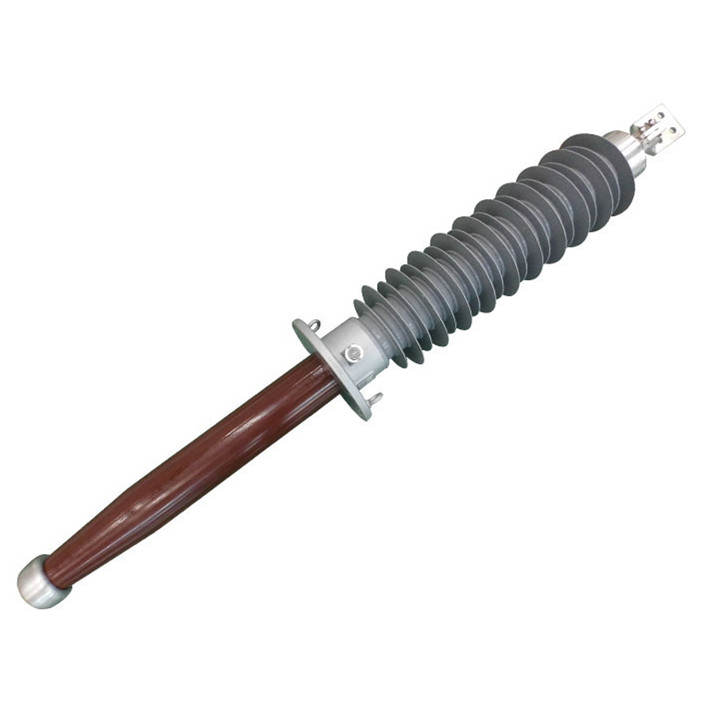


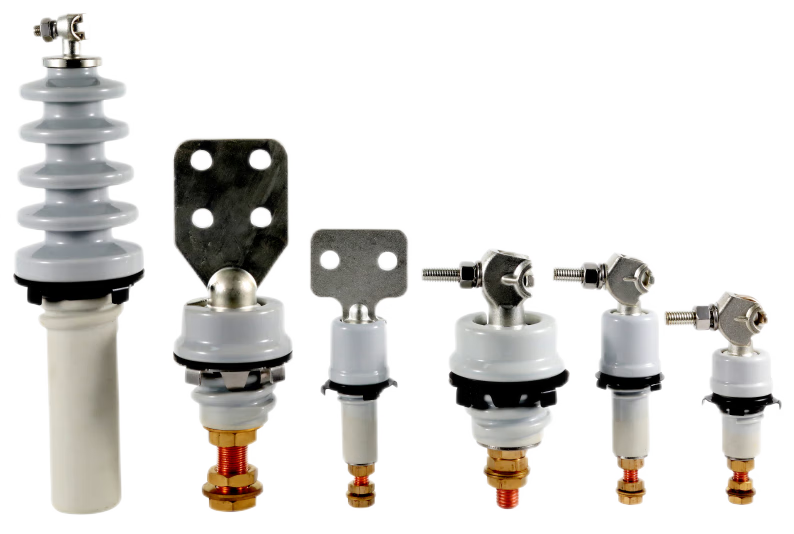

The basic parts of a transformer are the core, the primary winding, and the secondary winding. Apart from these, there are various other components such as insulation, transformer oil, cooling arrangements, protection relays, enclosure, etc present in larger transformers. Let’s discuss the working principle of a transformer before diving into the topic.
Transformer – Principle of operation
A transformer is a static device that works on the principle of electromagnetic induction. When an alternating current flows in the primary winding of a transformer, a varying electromagnetic field is generated which induces EMF in the secondary winding. The magnitude of the induced EMF is proportional to the turns ratio.
The following are the various transformer parts:
1. Core
2. Winding
4. Tank
6. Transformer oil
7. Oil Conservator
8. Breather
9. Radiators and fans
10. Explosion vent
12. Buchholz relay
The core provides a low reluctance path for electromagnetic flux and supports the primary and secondary windings. It is made by stacking thin sheets of high-grade grain-oriented steel which are separated by thin insulating material. In order to minimize the hysteresis and eddy currents, the carbon content of the core steel is maintained below 0.1%. When it is alloyed with silicon, eddy currents can be reduced.
The transformer carries two sets of winding per phase – Primary winding and secondary winding. These winding consists of several turns of copper or aluminum conductors, insulated from each other and the transformer core. The type and arrangement of winding used for transformers depend upon the current rating, short circuit strength, temperature rise, impedance, and surge voltages.
Out of the primary winding and secondary winding, the one which is rated for higher voltage is known as High voltage (HV) winding and the other is known as Low voltage (LV) winding.
Insulation is the most important part of transformers. Insulation failures can cause the most severe damage to transformers. Insulation is required between the windings and the core, between windings, between each turn of the winding, and between all current-carrying parts and the tank. The insulators should have high dielectric strength, good mechanical properties, and high-temperature withstand ability. Synthetic materials, paper, cotton, etc are used as insulation in transformers.
The core, winding and insulation are the most basic parts of a transformer and are present in all types.
The main tank is a part of a transformer that serves two purposes:
1. Protects the core and the windings from the external environment.
2. Serves as a container for oil and support for all other transformer accessories.
For connecting incoming and outgoing cables, terminals are present in transformers. They are mounted upon the bushings and connected to the windings’ ends.
In all oil-immersed transformers, transformer oil provides added insulation between the conducting parts, better heat dissipation, and fault detection features. Hydro-carbon mineral oil is used as transformer oil. It is composed of aromatics, paraffin, naphthenes, and olefins. Transformer oil has a flashpoint of 310 degrees Celsius, a relative permeability of 2.7, and a density of 0.96 kg/cm3.
The oil conservator is moved on top of the transformers and is located well above the tank and bushings. Normally a rubber bladder is present in some oil conservators. The transformer oil expands and contracts with an increase and decrease in temperature. The oil conservator provides adequate space for oil expansion. It is connected to the main tank through a pipe. A level indicator is fitted to the conservator to indicate the oil level inside.
Breather is present in all oil-immersed transformers that have a conservator tank. It is necessary to keep the oil-free from moisture. As the temperature variations cause the transformer oil to expand and contact, air flows in and out of the conservator tank. This air should be free from moisture. Breather serves this purpose.
The power lost in the transformer is dissipated in the form of heat. Dry transformers are mostly natural air-cooled. But when it comes to oil-immersed transformers, a variety of cooling methods are followed. Depending on the kVA rating, power losses, and level of cooling requirements, radiators and cooling fans are mounted on the transformer tank.
10. Explosion vent
An explosion vent acts as an emergency exit for oil and air gases inside a transformer. It is a metallic pipe with a diaphragm at one end, held slightly above the conservator tank. Faults occurring under oil elevate the pressure inside the tank to dangerous levels. Under such circumstances, the diaphragm ruptures at a relatively low pressure to release the forces from within the transformer to the atmosphere.
Tap changers are used to adjust the secondary voltage of transformers. They are designed to change the turn ratio of the transformer as required. There are two types of tap changers: On-load tap changers and Off-load tap changers.
12. Buchholz relay
Buchholz relay is one of the most important parts of oil-immersed transformers rated over 500kVA. It is an oil and gas actuated relay that is used to sense faults occurring in the parts immersed in the oil.
Short circuits occurring under the transformer oil generate enough heat to decompose the oil into hydrogen, carbon monoxide, methane, etc. These gases gradually move toward the conservator tank through the connecting pipe. Buchholz relay, which is mounted on the pipe connecting the conservator tank and the main tank, senses these gases and activates the trip and alarm circuits. The trip circuit opens the circuit breaker supplying current to the primary winding and interrupts the current flow.