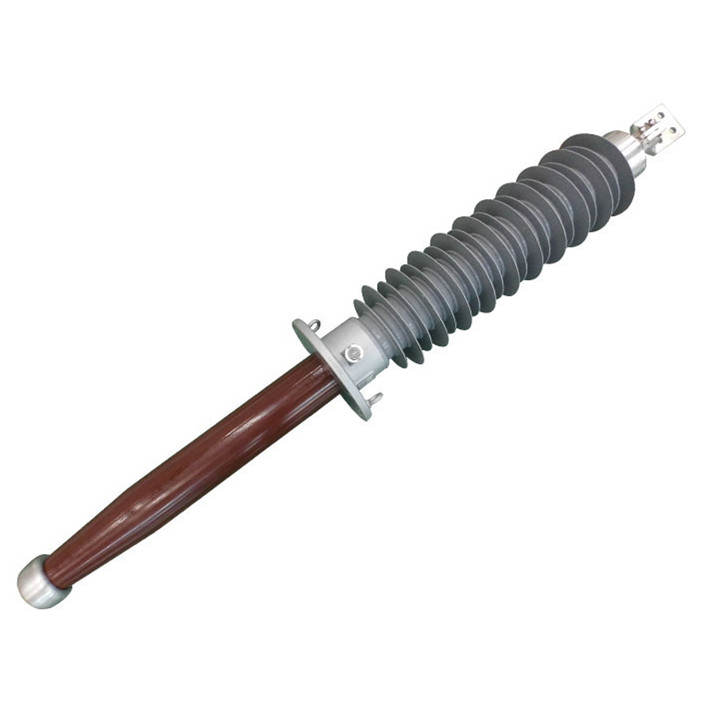
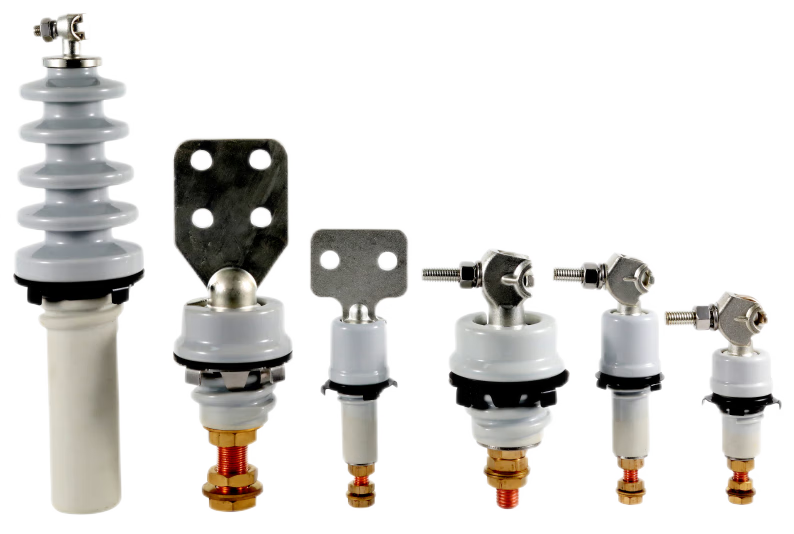
Most high-voltage bushings for power transformers rated at 110kV and above are OIP Transformer Bushings. They rely on a capacitive core to improve electric field distribution. The capacitive core consists of multiple layers of insulating paper, with aluminum foil sandwiched between layers at positions specified by design. This forms a series of coaxial cylindrical capacitors, with the insulating paper impregnated with mineral oil for insulation.
Preventive testing for OIP Transformer Bushing involves periodic power-off inspections and tests, primarily including main insulation tests and end-shield tests, along with examinations of other components.
(1) Main Insulation Test. The shunt method is used to measure the dielectric loss of the main insulation. An increase in the dielectric loss value is likely caused by deterioration of the bushing itself or moisture ingress. An abnormally low or negative dielectric loss value may result from interference formed by a “T”-shaped network, such as poor grounding of the bushing base flange, contamination or moisture on the bushing surface, or moisture in the end shield. It could also be caused by moisture in the standard capacitor of the dielectric loss tester.
(2) End-screen test. Measure the insulation resistance. If it is less than 1000 MΩ, measure the end-screen's tgδ to ground, which should not exceed 2%. Use the reverse-shielding method for end-screen dielectric loss measurement. The insulation condition of the end-screen reflects the outer insulation level; moisture ingress in the outer insulation will lead to gradual moisture penetration in the main insulation.
(3) Inspection of the seal integrity and contact condition between the bushing cap and the conductive rod. When the outer seal ring of the bushing cap fails to seal properly, moist air enters the internal cavity of the cap, causing oxidation of the internal threads connecting the cap to the conductive core rod. This results in poor contact between the cap and the conductive core rod, potentially leading to abnormal heating of the bushing cap during operation. Some poorly designed rain caps, due to poor contact with the conductor pin, may remain at a “floating potential.” This can cause high-frequency discharges to the porcelain sleeve, resulting in abnormally elevated dielectric loss test values for the main insulation.
During inspection, check for verdigris rust or oil leakage near the sealing ring. Additionally, use a multimeter to measure whether the resistance between the bushing cap and the conductor rod is zero. If necessary, perform a three-phase DC resistance test on the transformer before and after maintenance to verify whether the resistance values and balance coefficient exceed the specified limits.
(4) Inspect the oil level and leakage condition of the bushing. If the oil level abnormally rises, power must be shut off to conduct main insulation tests. If necessary, perform gas chromatography analysis of dissolved gases in the bushing insulation oil to check whether hydrogen, acetylene, and total hydrocarbon levels exceed standards. If the bushing oil level abnormally drops, inspect for oil leakage, typically occurring at the bushing cap and end shield. If necessary, take oil samples for moisture content testing. Additionally, note that a blocked oil level indicator tube may cause a false oil level reading.
(5) Inspect the grounding condition of the end screen. During normal operation of the end screen, ensure proper grounding is maintained.