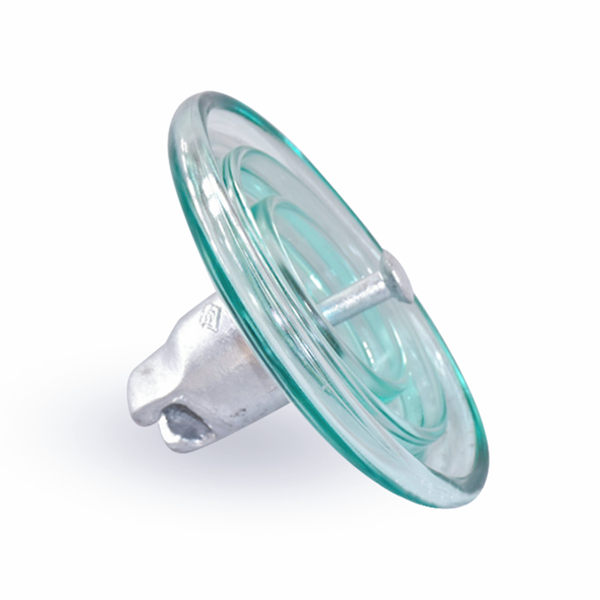
RTV Coated Glass Insulator
RTV silicone anti-pollution flashover coatings have been used extensively for years – initially mainly on post insulators and bushings at substations and more recently also for porcelain or glass string insulators on transmission lines. One of the reasons why the latter use has been relatively limited in the past has been working height and field conditions that make it a challenge to ensure consistent quality and evenness of spraying.
There have already been years of positive application experience in this country as far as coating glass or porcelain transmission line insulators with RTV silicone. Methods adopted for coating, mainly at working height on transmission lines, have included spraying and brushing. While both have proven difficult due to working height that made it hard to ensure consistent quality, significant improvements in pollution flashover performance of glass or porcelain insulators were nevertheless achieved.
Types of glass insulators
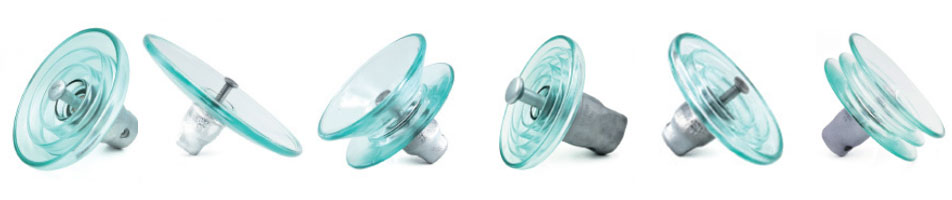
Disk suspension glass insulators are divided into Standard Type, Anti-pollution Type, DC type, Aerodynamic Type, Out-ribs Type and Ground Wire Type.
The Cap and Pin suspension type glass insulators produced by our company include: 40~550kN standard profile, 70~300kN fog type profile, 70~240kN open profile, 70~100kN ground profile and 70~240kN double shed profile, which can be widely applied in high-voltage, extra-high-voltage and ultra-high-voltage transmission line with voltage grade between 10KV and 1000KV.
Characteristics of glass insulators
Small size, light weight, zero-value self-breaking, and easy detection; high mechanical strength; good arc resistance; good self-cleaning performance and not easy to age. In addition, the spraying material has the advantages of strong hydrophobicity, long-term resistance to pollution, low leakage current on the surface, and maintenance-free during operation; it is widely used in various circuits at home and abroad.
Glass part profiles of toughened glass insulators
Standard profile
Design of insulating part has small ribs. insulators of standard profile perform well in areas of mild contaminations. Creepage distance is over the mandatory requirements of international standards.
Fog type profile
Design of insulating part has strongly extended ribs which protect from flowing contaminations and dry depositions. The distance between ribs prevents frompartial discharge between adjacent ribs under severe contamination. Such insulatorsperform well in areas with industrial pollution, heavy rainfall and coastal areas.
Open profile
Design of insulating part with open profile is marked by absence of under-ribsand extended diameter of disk. Open profile reduces pollutant accumulation on the surface. This design is effective in desert areas with wind and sandstormsand also can solve ice-bridging problems.
External shed profile
Design of insulating part has two external ribs. As a result of ribs arranged on the side face, the surface of insulator is self-cleaned by strong wind. insulators perform well in areas with industrial pollution and salty soil.
| Item |
Spacing(mm) |
Diameter(mm) |
Creepage Distance(mm) |
| U40B |
110 |
175 |
190 |
| 100 |
175 |
190 |
| U70BS |
127 |
255 |
320 |
| U70BL |
146 |
255 |
320 |
| U100BL |
144 |
255 |
320 |
| U100BS |
127 |
255 |
320 |
| U120B |
146 |
255 |
320 |
| U120BS |
146 |
280 |
450 |
| U160BL |
170 |
280 |
400 |
| 155 |
280 |
400 |
| U160BS |
146 |
280 |
400 |
| U210B |
170 |
280 |
400 |
| 170 |
280 |
450 |
| 170 |
280 |
400 |
| 170 |
280 |
450 |
| U300B |
195 |
320 |
485 |
| U400B |
205 |
360 |
550 |
| U530B |
240 |
380 |
620 |
| 300 |
400 |
700 |
| U70BLP |
146 |
255 |
400 |
| 146 |
280 |
450 |
| 146 |
320 |
550 |
| 146 |
255 |
400 |
| U100BLP |
146 |
280 |
450 |
| 146 |
320 |
550 |
| 146 |
255 |
400 |
| U120BP |
146 |
280 |
450 |
| 146 |
320 |
550 |
| 155 |
280 |
450 |
| U160BLP |
170 |
280 |
450 |
| 170 |
320 |
550 |
| 155 |
320 |
550 |
| U120BP |
170 |
320 |
550 |
| 170 |
320 |
550 |
| 195 |
320 |
550 |
| U120BP |
195 |
360 |
635 |
| 240 |
360 |
635 |
| 52-3A |
255 |
146 |
320 |
| 52-5A |
255 |
146 |
320 |
| 52-8A |
280 |
146 |
400 |
| 52-11A |
280 |
155 |
400 |
| 52-4A |
255 |
146 |
320 |
| 52-6A |
255 |
146 |
320 |
| 52-10A |
280 |
165 |
380 |
| 52-3FA |
280 |
146 |
450 |
| 52-5FA |
280 |
146 |
450 |
| 52-8FA |
280 |
171 |
450 |
| 52-11FA |
280 |
170 |
450 |
Contact us and get support with more product information.
Product Advantages
Hydrophobic Surface for Pollution Flashover Resistance
The RTV coating applied to these glass insulators provides superior water repellency, reducing the likelihood of pollution-induced flashovers even under prolonged exposure to wet or dusty climates. The coating helps lower surface leakage currents, supporting uninterrupted operation in areas where contaminants and moisture are prevalent. This property enhances the reliability of NJREC's glass electrical insulators across varied weather conditions without the need for frequent cleaning or intervention, ensuring long-term system performance in harsh environments.
Multiple Mechanical Strength Levels for Broad Application
NJREC’s RTV-coated glass units cover a wide mechanical strength range, making them adaptable to various transmission loads in both standard and extreme settings. From 40kN to 530kN, the insulators suit standard and heavy-duty line setups across different geographic regions. Combined with creepage distances reaching 700 mm and spacing dimensions from 110–300 mm, these glass insulators meet the functional demands of modern high-voltage systems with consistent performance and structural resilience throughout their service life.
Design Variants for Specific Climate Zones
NJREC’s design library includes profiles optimized for industrial contamination, fog, wind-blown sand, or ice exposure, each with distinct structural advantages. These engineering variations help ensure that each RTV-coated glass electrical insulator performs optimally within its designated climate zone, minimizing the risks of flashover or structural degradation. By selecting profiles such as fog type, open profile, or external shed, users achieve tailored performance while retaining long service life, regardless of ambient temperature or airborne particulate challenges.
Use Scenarios
High Humidity and Coastal Transmission Lines
In areas with high moisture content or salt exposure, such as coastal or tropical regions, NJREC’s RTV-coated glass insulators maintain electrical integrity by preventing flashover caused by wet surfaces and corrosive deposits. Their strong hydrophobic properties and durable coatings make them ideal for long-term use in seaside transmission infrastructure that faces persistent condensation, saline aerosols, and marine wind exposure, supporting sustained insulation under both high humidity and salt-rich environmental loads.
Industrial Zones with Airborne Contaminants
NJREC's fog type and external shed glass electrical insulators are suited for industrial areas with heavy airborne pollutants, including chemical particulates and exhaust emissions. These profiles reduce the accumulation of dirt or chemical deposits, and the RTV coating prevents dry band arcing, maintaining insulation performance during high smog or dust events. Combined, these features ensure steady insulation performance and reduce downtime caused by contamination-related failures in production-intensive regions with elevated particulate concentration.
Remote or Hard-to-Reach Line Installations
For mountainous, desert, or snowy regions where access for maintenance is limited or challenging, NJREC’s RTV-coated glass insulators provide long service life with minimal need for cleaning, repair, or replacement. Open profile and aerodynamic designs help resist dust buildup or ice bridging, allowing stable mechanical and electrical behavior despite infrequent human intervention. Their robust self-cleaning capacity and resistance to mechanical stress make them dependable for high-altitude or remote-line applications, including long-distance overhead lines.
About Us
NJREC, established in 2005, is a specialized manufacturer of transmission and distribution insulation products. With over two decades of experience, NJREC focuses on the design, production, and testing of glass insulators and related components. The company offers a broad portfolio that includes RTV-coated insulators, porcelain bushings, and transformer accessories. NJREC combines ISO9001:2015-certified systems with in-house testing laboratories to ensure each product meets performance standards. As a trusted glass insulator manufacturer, NJREC serves domestic and international clients with a range of products tailored for voltage classes from 10kV to 1000kV, covering needs from standard to ultra-high voltage infrastructure.
FAQ
What coating is used on NJREC glass insulators?
An RTV silicone coating is applied to improve pollution flashover performance and surface resistance in harsh environments.
Are different profiles available for NJREC glass insulators?
Yes, NJREC provides standard, fog type, open, and external shed profiles to suit different regional and environmental conditions.
Which voltage levels can NJREC glass electrical insulators handle?
These insulators are applicable in systems from 10kV to 1000kV, including high, extra-high, and ultra-high voltage transmission lines.
Does NJREC offer green glass insulator models?
The product range includes color-tinted glass types, though specific shades depend on product series; all maintain the same structural performance.
What are the key strengths of NJREC’s coated insulators?
They offer excellent hydrophobicity, low leakage currents, and long-term durability, ideal for polluted and remote environments.